

Parma, a compact city in the Po valley in a part of northern Italy that was once the ancient Roman province of Aemilia and is now part of the modern province of Emilia-Romagna, was the capital of the duchy of Parma and Piacenza from the 16th to the 19th century. The Bourbon era that concerns us here at Versailles Century had a false start in 1731 and then its real start in 1748. Up to 1731, the duchy of Parma had been ruled by dukes of the house of Farnese.
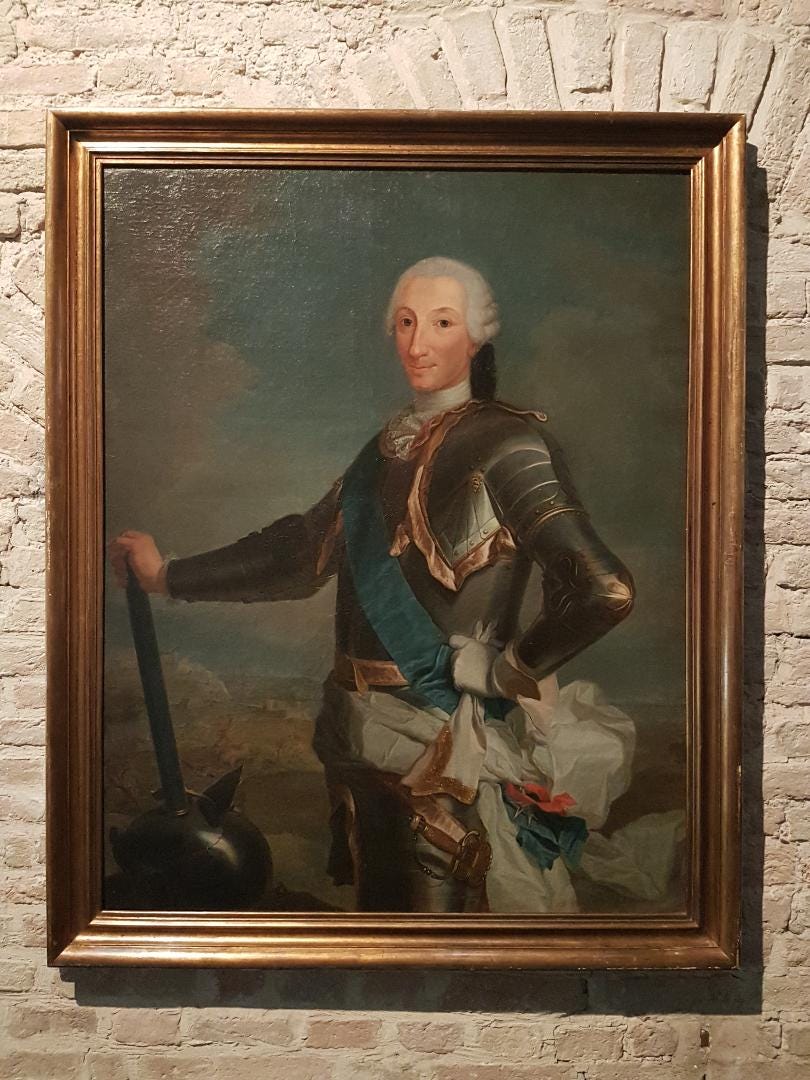
Pictured: The Infante Charles of Spain (1716-1788), Duke of Parma, then King of Naples and Sicily, and later King of Spain, by L.M. van Loo. My own photo taken in the Nat’l Gallery in the Pilotta Complex in Parma in May, 2024.
In 1731, the teenaged Infante Charles of Spain, the eldest son of Philip V and Elisabeth Farnese, arrived in Parma with a Spanish army to claim the duchy. On what grounds did he claim it? His mother was the niece of the last Duke of Parma of the house of Farnese. In fact, she was the last living Farnese. However, Charles stayed in Parma for only a few years. The War of the Polish Succession (1733-1736), which despite its name was as much about Italy as Poland, opened up new opportunities. In 1734, the year of his majority, he set off southwards with a Spanish army to grab the rich prize of the joint Neapolitan and Sicilian thrones. In the peace settlement at the end of the war, Charles surrendered Parma and moved to Naples, taking the vast art collection of his Farnese ancestors with him.
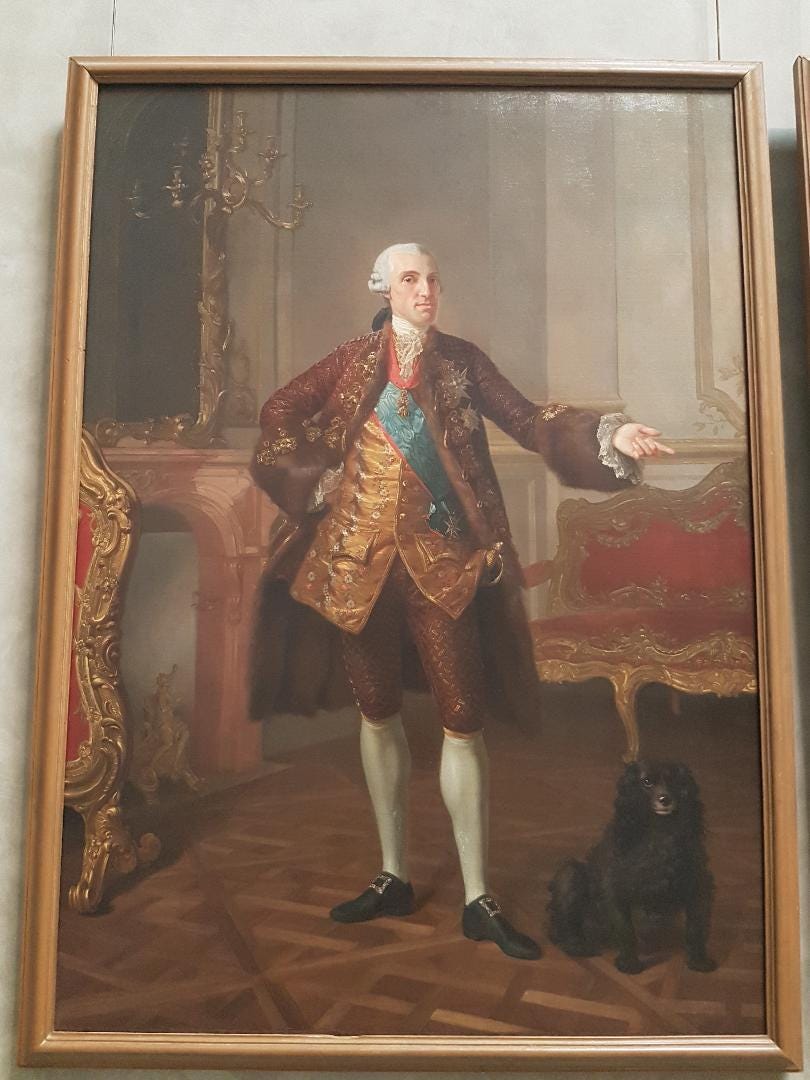
Pictured: The Infante Philip of Spain (1720-1765), Duke of Parma from 1748 until his death, by Laurent Pécheux. My own photo taken in the Nat’l Gallery in the Pilotta Complex in Parma in May, 2024.
The association of Parma with the Bourbons does not end with Charles’s abandonment of the duchy, however. Elisabeth Farnese and Philip V had more sons. The next eldest, Philip, became the next Spanish Bourbon candidate for the ducal throne. By the time the War of the Austrian Succession broke out in 1740, Philip was married to Louis XV of France’s eldest daughter, Louise-Élisabeth. With the military and diplomatic support of both Spain and France, the duchy of Parma was awarded to Philip by the Treaty of Aix-la-Chapelle in 1748.
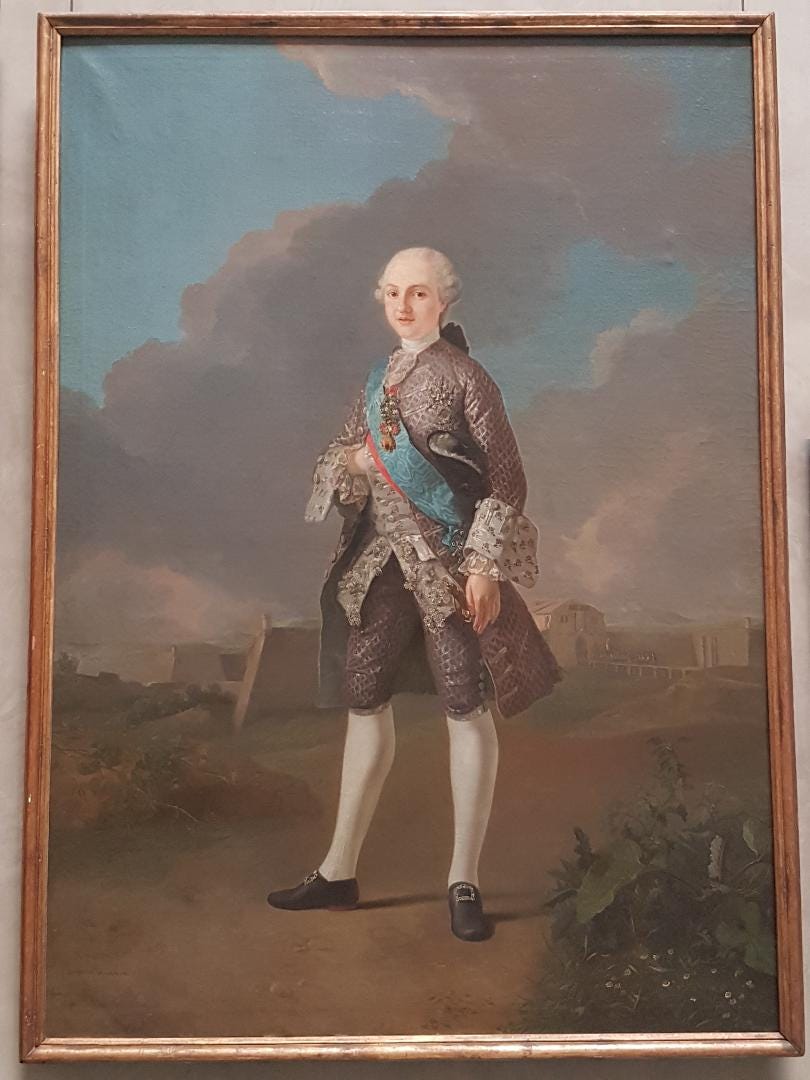
Pictured: The Infante Ferdinand of Spain (1751-1802), the second Duke of Parma of the house of Boubon, by Laurent Pécheux in 1765. My own photo taken in the Nat’l Gallery in the Pilotta Complex in Parma in May, 2024.
Philip and later his son Ferdinand ruled Parma for the remainder of our period. Ferdinand, as loyal subscribers will have seen, was the recipient of the letters from Louis XV, his maternal grandfather, that I have been translating and posting since the beginning of the year.
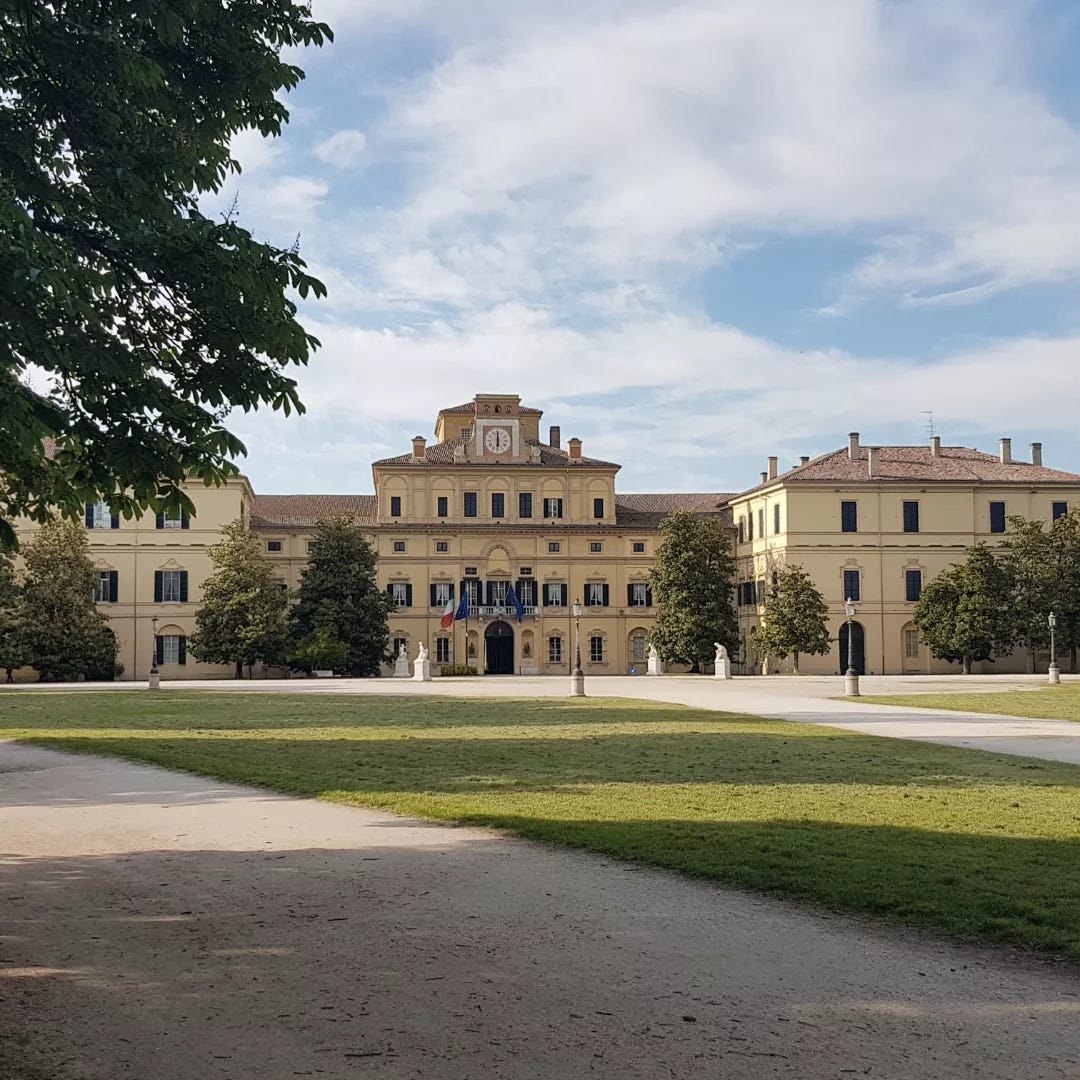
Pictured: The ducal palace in what is now called the Parco Ducale in Parma. Its grounds were once the private garden of the palace, but today they are a public park. Own photo in May, 2024.
The Bourbon dukes brought new administrative methods and reforms to Parma, mainly implemented by the French-born minister Dutillot or Du Tillot. They also stimulated agriculture and industry. In brief, Parma prospered in the second half of the 18th century.
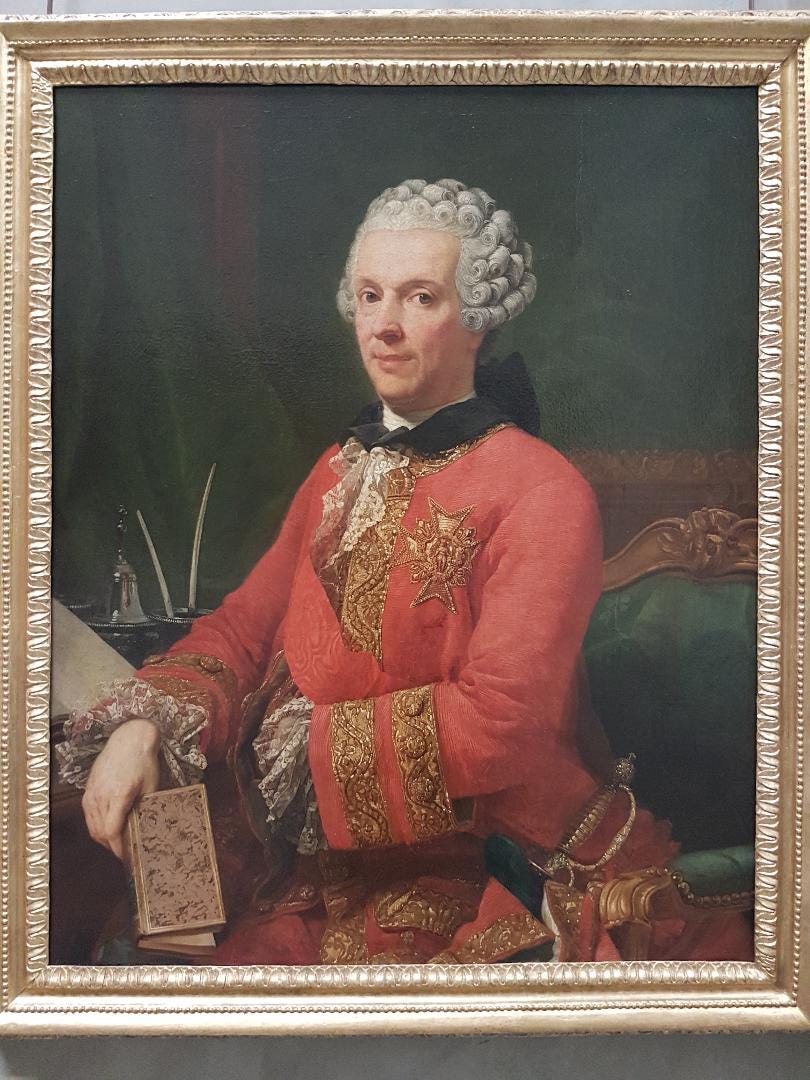
Pictured: Léon-Guillaume Dutillot or Du Tillot, de facto prime minister of Parma from 1759 to 1771, by Pietro Melchiorre Ferrari. My own photo taken in the Nat’l Gallery in the Pilotta Complex in Parma in May, 2024.
They also brought new cultural energy, gathering a new art collection, creating a new academy of fine arts in the Pilotta, the old palace of the Farnese, not to mention assembling a new library, also in the Pilotta.
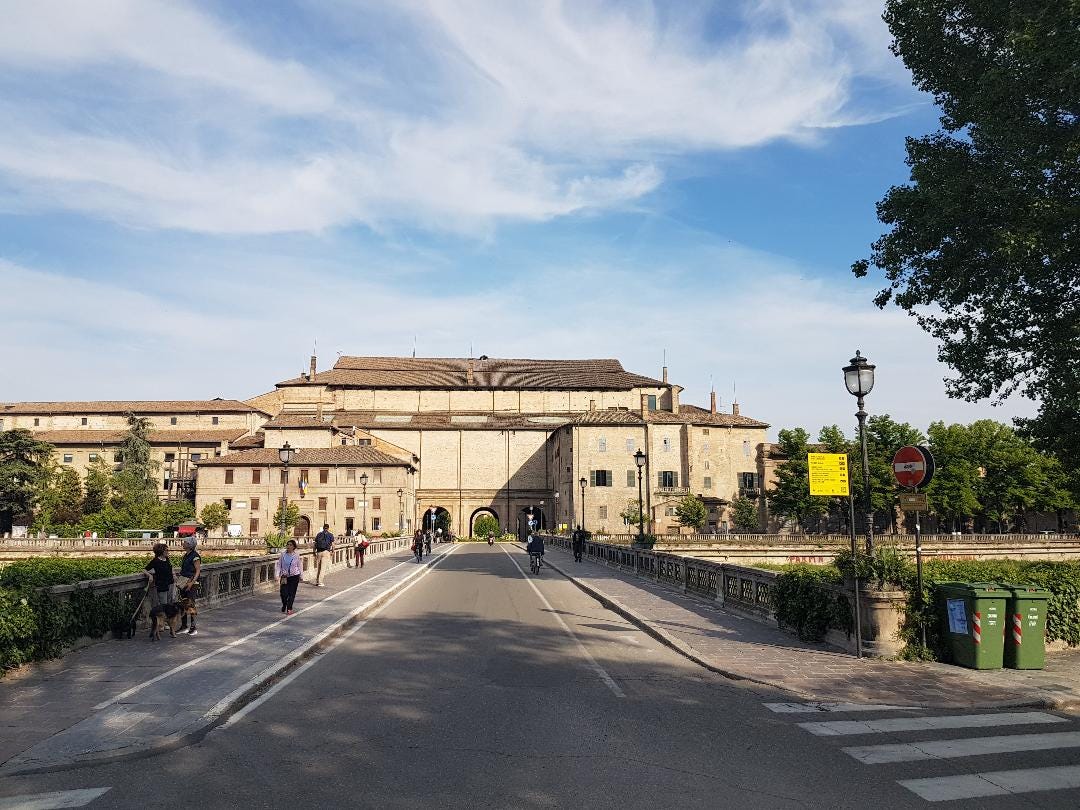
Pictured: A view of the Pilotta Palace from the gate of the Parco Ducale in Parma. My own photo taken in May, 2024.
The library is called the Biblioteca Palatina, and it is a marvel. It opened in 1761.
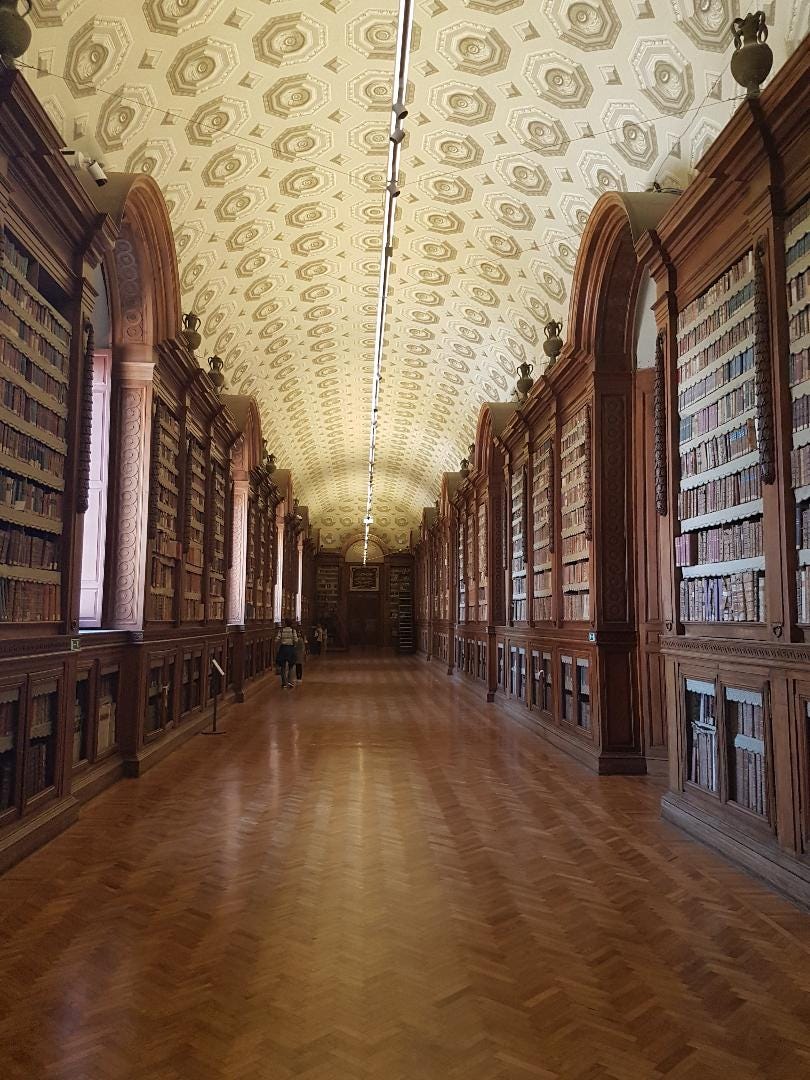
Pictured: A view of the central hall of the Biblioteca Palatina. My own photo taken in the Nat’l Gallery in the Pilotta Complex in Parma in May, 2024.
Dukes Philip and Ferdinand (and Prime Minister Dutillot) also left their architectural mark on the city with the help of the French-born architect Ennemond-Alexandre Petitot, who designed the Biblioteca Palatina. The governor’s palace, the Palazzo del Governatore, also by Petitot, remains a landmark in Parma’s urban fabric.
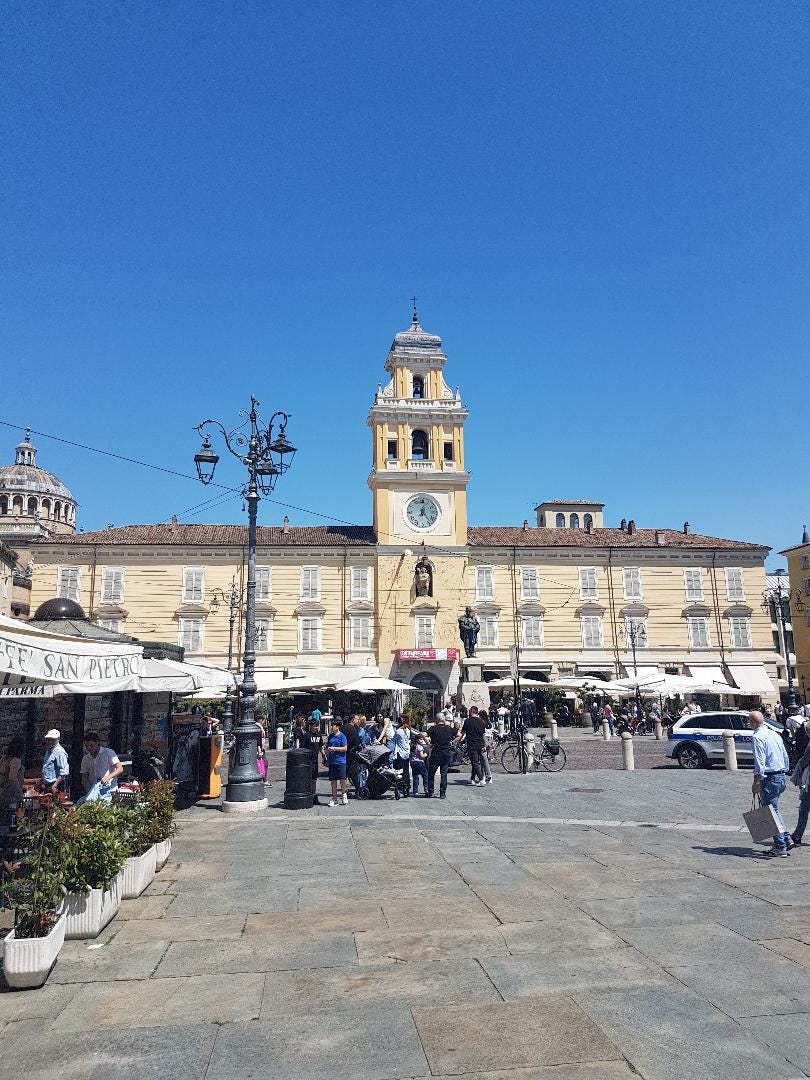
Pictured: A view of the government palace in Parma. My own photo taken in May, 2024.
In short, the Bourbons of Parma were classic enlightened despots, only on a smaller scale than their more famous crowned colleagues. They even patronized the excavation of Parma’s answer to Pompei, the ancient Roman city of Veleia. Someday someone should do for the Bourbons of Parma what Harold Acton did for the Bourbons of Naples and write a big fat book about them (in English).
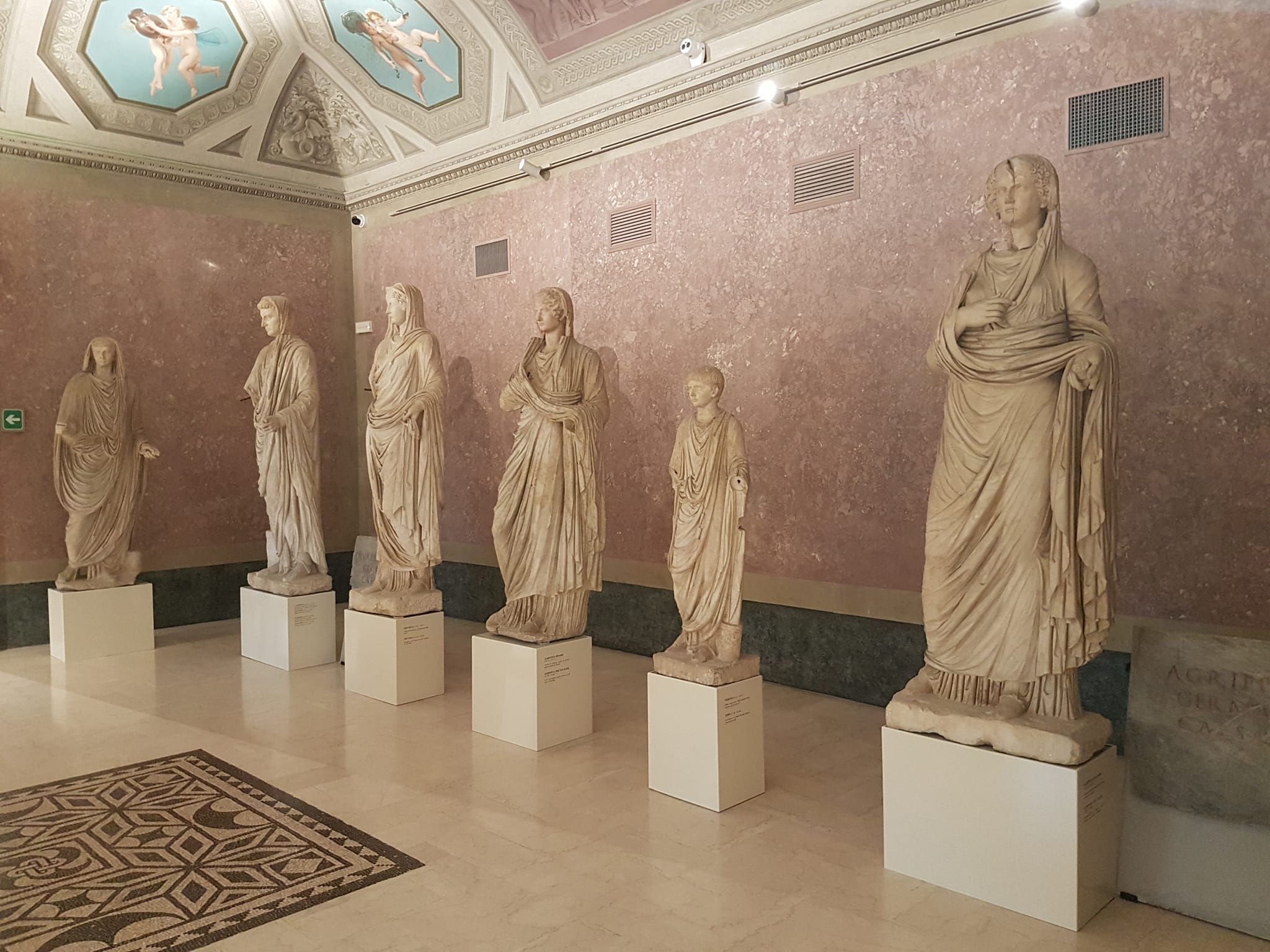
Pictured: Statues of members of the Julio-Claudian imperial family unearthed at Veleia in the 1760s. My own photo taken in the Museum of Archaeology in the Pilotta Complex in Parma in May, 2024.
I only had 1 full day in Parma, rather than the 2 that were planned, thanks to a canceled flight. I was therefore unable to visit the prime Bourbon site, namely the Reggia di Colorno. There’s so much more to see and learn in Parma that I’ve resolved to go back within the next few years. I’m planning what I call The Bourbon Capitals Tour, which in Italy also includes Naples, Palermo, and Lucca. Naples and Palermo will be their own trip, but I reckon that on another trip I’ll start in Rome, go to Lucca, and then re-visit Parma properly. I’d want to stay for at least a week, I think. At some point, I will also have to visit the Spanish Bourbon capitals, namely Madrid and Seville. Oddly enough, I still have another Bourbon capital in France to visit. It’s neither Paris nor Versailles. Which city do you think it could be?
David, you just invented the Bourbon Grand Tour! As for the other Bourbon capital of France you still have to visit, could it be Strasbourg?